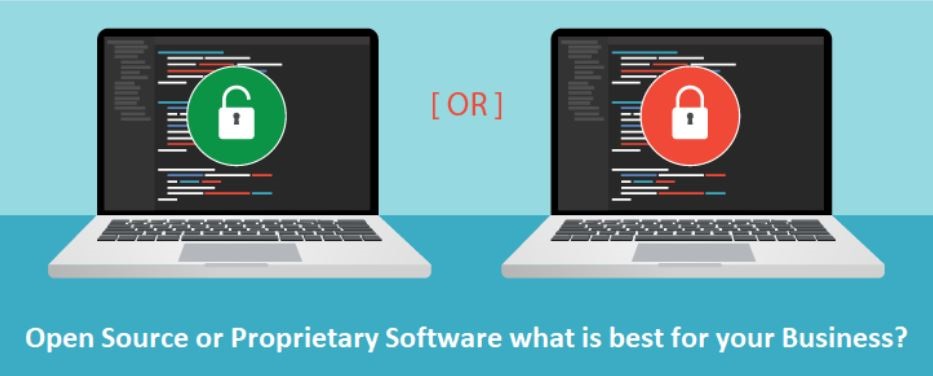
The decision between enterprise software and open-source solutions extends far beyond initial licensing fees. A comprehensive analysis of total cost of ownership (TCO) and licensing risks reveals that the true financial impact emerges over time, with hidden costs and compliance complexities significantly affecting both models. Organizations now face unprecedented price increases from major vendors—Microsoft 365 jumped up to 43% in 2025, while VMware increased prices up to 10 times in some cases—making the TCO equation more critical than ever.
Total Cost of Ownership: The Complete Picture
Initial Investment Dynamics
Enterprise software typically demands substantial upfront costs, with licensing fees averaging $125,000 for mid-sized implementations, plus 22% annual maintenance fees. In contrast, open-source solutions eliminate licensing costs entirely, though this apparent advantage dissolves when accounting for comprehensive implementation expenses. Open-source projects require $50,000-$75,000 for initial setup, $40,000-$50,000 for specialized training, and $25,000-$40,000 annually for professional support—costs that proprietary software often bundles into predictable pricing.
A critical misconception is that open-source means “free.” While the Synopsys 2025 report found that 83% of enterprises increased open-source usage to lower TCO, the real savings come from reallocating licensing fees to value-adding activities rather than eliminating costs altogether. A 2023 Forrester study revealed that mid-sized enterprises spend $40,000-$90,000 annually on open-source customization and integration alone.
Five-Year TCO Comparison
Over a five-year horizon, enterprise software TCO typically reaches $565,000, while open-source solutions range from $395,000-$545,000. However, this 10-30% cost advantage for open-source narrows significantly when organizations require enterprise-grade features. The calculation must include:
- Maintenance costs: Software maintenance constitutes 15-25% of annual budgets, but can reach up to 90% of total cost of ownership when technical debt accumulates. Enterprise software spreads this through predictable subscription fees, while open-source requires dedicated internal resources or commercial support contracts starting at $3,000 annually for basic coverage.
- Hidden infrastructure costs: On-premises enterprise solutions require server hardware ($5,000-$25,000), network infrastructure, backup systems, and dedicated IT staff costing $20,000+ annually. Open-source deployments face similar infrastructure needs but offer more flexibility in hardware selection, often running on commodity hardware that reduces costs by 15-25%.
- Support and expertise: Enterprise software includes vendor support with defined SLAs—typically 4-hour response times for critical issues and 5-day resolution windows. Open-source community support varies dramatically, with GitHub support taking weeks to months for standard users versus 12 hours for enterprise customers. Commercial open-source support from vendors like Red Hat costs $15,000-$40,000 annually depending on coverage levels.
The Migration Cost Factor
Switching software platforms—whether entering or exiting—carries substantial financial burden. The 2025 DevOps Migration Index found that the average migration project loses $315,000 due to timeline overruns, with 57% of organizations spending over $1 million on platform migrations annually. Migration costs include:
- Higher unit costs outside volume discount agreements (10-20% premium)
- Temporary dual-running of systems during transition
- Data migration and validation expenses
- Productivity losses as teams adapt to new workflows (11-25% of work hours)
Organizations planning exits from enterprise agreements should budget 12-18 months for transition, with short-term cost spikes reaching 20% of IT budgets during cutover periods.
Enterprise Software Licensing Risks
Audit Epidemic and Financial Exposure
Software vendor audits have reached crisis proportions. The 2025 Survey on Enterprise Software Licensing and Audit Trends revealed that 62% of companies faced audits in the past year, up dramatically from 40% in 2023. For large enterprises with 5,000+ employees, audit frequency climbed to 66%. The financial consequences are severe: 32% of organizations incurred penalties exceeding $1 million, more than tripling from 10% two years prior.
Oracle, Microsoft, IBM, and SAP remain the most audit-aggressive vendors, with Oracle’s License Management Services (LMS) team specifically targeting organizations uncertain about their licensing positions. Audit defense alone costs $50,000-$200,000 per incident, with organizations allocating 3-10 team members (52% of respondents) and dedicating 11-20% of working hours to audit response. In 25% of cases, C-suite executives become directly involved, highlighting the operational disruption these audits create.
Complexity and Compliance Challenges
Enterprise licensing has grown increasingly complex, particularly in virtualized and cloud environments. Oracle’s VMware licensing policy exemplifies this complexity—every physical host capable of running Oracle software must be fully licensed, not just the host where it currently runs. VMware features like vMotion and DRS can inadvertently expand licensing requirements to entire clusters, creating “toxic combinations” that multiply costs unexpectedly.
The shift to cloud computing has intensified compliance challenges. The 2025 survey found that 53% of respondents reported increased compliance complexity due to cloud adoption, up from 38% in 2023. Hybrid environments require tracking licenses across on-premises, IaaS, PaaS, and SaaS deployments, with different metrics (processor cores, named users, concurrent users) applying in each context.
Vendor Lock-in and Price Escalation
Enterprise software creates substantial lock-in through proprietary data formats, custom integrations, and specialized workflows. The UK Cabinet Office warned in 2024 that overreliance on AWS could cost public bodies £894 million, while Microsoft faced $1.12 billion in antitrust penalties for licensing practices that discouraged Azure migration. Switching costs include:
- Loss of volume discounts (10-20% higher per-license costs outside enterprise agreements)
- Data migration to different formats or APIs
- Retraining staff on alternative platforms
- Recreating custom integrations and workflows
Price increases have accelerated dramatically in 2024-2025. Microsoft raised prices 10-20% across server products, with Microsoft 365 increasing up to 43% when bundling AI features. SAP increased annual support fees by 5% in 2024, while Oracle implemented an 8% increase in the US with “commensurate with inflation” adjustments globally. For small organizations (50 users), annual cost impacts reached $66,108 (132% of software budget), while enterprises (5,000 users) faced $6.79 million in additional expenses.
Open-Source Licensing Risks
The Copyleft Conundrum
Open-source licenses fall into two categories with dramatically different risk profiles: permissive (MIT, Apache, BSD) and copyleft (GPL, AGPL, LGPL). Copyleft licenses create “viral” effects requiring that derivative works be released under the same license terms. The GNU General Public License (GPL) represents the strongest copyleft license—any software combining proprietary code with GPL components and then distributed must release the full source code under GPL terms.
The 2024 Open Source Security and Risk Analysis (OSSRA) report found that 53% of audited codebases contained open-source components with license conflicts. These conflicts arise when projects combine code under incompatible licenses, such as GPL and proprietary code, or when using Creative Commons Share-Alike (CC-SA) licenses that accounted for 33% of all license conflicts discovered.
Legal and Financial Consequences
Non-compliance with open-source licenses carries severe penalties. Legal consequences include:
- Mandatory source code disclosure (potentially exposing proprietary intellectual property)
- Injunctions halting product shipments
- Monetary damages and legal fees
- Increased exploitation risk once source code becomes public
Unlike enterprise software where vendors provide indemnification against IP infringement claims, open-source offers no vendor protection. Organizations assume full liability for compliance, making software composition analysis (SCA) tools essential for detecting license obligations throughout the supply chain.
The ambiguity in some open-source licenses adds risk. The JSON license, based on the permissive MIT license, includes the restriction that “software shall be used for good, not evil”—language open to interpretation that creates legal uncertainty. The Apache License 2.0 includes explicit patent grants providing protection against patent litigation, while BSD licenses grant patent rights only by implication with unclear scope.
Dual Licensing and Commercial Complications
Many open-source projects employ dual licensing, offering software under both open-source (typically GPL) and commercial licenses. MySQL and Qt are prominent examples—users can deploy them freely under GPL, but companies wanting to integrate them into proprietary products without releasing source code must purchase commercial licenses. This model enables sustainable funding but creates management complexity around:
- Ensuring contributions comply with both licenses
- Determining when commercial licenses are required
- Navigating the transition between free and paid tiers
Security Vulnerability Management
Open-source introduces unique security challenges requiring rigorous vulnerability management. Organizations must invest in regular security audits, monitor security advisories across potentially hundreds of dependencies, and maintain relationships with open-source communities. The average cloud misconfiguration breach costs $4.14 million, while general data breaches average $9.44 million.
End-of-life (EOL) open-source software presents particular risk. Organizations relying on legacy applications face unpatched vulnerabilities that attackers specifically target. Non-compliance with SOC 2, GDPR, and HIPAA standards due to insecure EOL software can result in significant fines beyond breach costs. Commercial support services like HeroDevs provide continued security patches for EOL frameworks, but at additional cost.
Dependency management amplifies security concerns. A single open-source project may include dozens or hundreds of dependencies, each requiring monitoring for vulnerabilities. Automated scanning tools like OpenSSF Scorecard, Grype, and commercial solutions provide initial analysis, but comprehensive security requires ongoing investment in vulnerability tracking, patch management, and compensating controls when patches aren’t immediately available.
Strategic Considerations and Hybrid Models
When Enterprise Software Makes Sense
Enterprise software proves optimal when organizations prioritize:
- Predictable costs and budgeting: Subscription models provide clear annual expenses without surprise implementation or support costs
- Vendor accountability: SLA-backed support, legal indemnification, and dedicated customer success teams
- Rapid deployment: Pre-built features and professional implementation services reduce time-to-value
- Compliance requirements: Vendors maintain certifications (SOC 2, FedRAMP, HIPAA) and handle regulatory updates
- Limited internal technical expertise: Organizations lacking specialized skills benefit from vendor-managed solutions
The ROI calculation for enterprise software typically shows positive returns of 56-200% over 3-5 years when efficiency gains, error reduction, and productivity improvements are quantified.
When Open-Source Excels
Open-source solutions deliver superior value for organizations with:
- Strong internal technical capabilities: Teams able to customize, integrate, and maintain complex software
- Flexibility requirements: Need to modify source code or avoid vendor roadmap constraints
- Cost optimization goals: Ability to reallocate licensing savings to innovation and development
- Multi-cloud or hybrid strategies: Open-source integrates seamlessly across platforms without vendor restrictions
- Long-term cost horizons: Initial higher implementation costs amortize favorably over extended timelines
Open-source enables cost savings of 30-60% when organizations have mature development practices and appropriate governance structures. Red Hat Enterprise Linux (RHEL) and PostgreSQL demonstrate successful enterprise open-source models, combining community innovation with commercial support options.
Hybrid Approaches: The Pragmatic Solution
Leading organizations increasingly adopt hybrid models combining open-source flexibility with proprietary enhancements. Red Hat exemplifies this approach—building RHEL on open-source Linux while providing proprietary enterprise features, support, and certifications. VMware Tanzu similarly combines open-source Kubernetes with proprietary management tools.
Hybrid models offer:
- Cost-effective core functionality through open-source foundations
- Enterprise-grade features, support, and compliance through commercial add-ons
- Reduced vendor lock-in while maintaining professional accountability
- Flexibility to scale proprietary components based on specific needs
The Cloud Native Computing Foundation (CNCF) demonstrates effective hybrid governance, enabling Kubernetes to become enterprise-critical while maintaining open-source principles. Organizations implementing hybrid models should establish clear governance for what code remains proprietary versus open-source, automate security scanning and testing pipelines, and maintain active community involvement.
Implementation Best Practices
For Enterprise Software Deployments
Organizations can optimize enterprise software investments through:
- Comprehensive TCO analysis: Include all direct costs (licensing, implementation, training) and indirect costs (productivity loss, maintenance, audit defense) over 5-10 year horizons
- License management programs: Implement automated tools for tracking deployments, calculating entitlements, and identifying optimization opportunities. This prevents audit surprises and enables license harvesting from inactive users
- Strategic negotiation: Evaluate alternatives (CSP, hybrid, competitor solutions) before renewal to establish strong BATNA (Best Alternative to Negotiated Agreement). Start planning 12-18 months before contract expiration
- Audit preparedness: Maintain accurate inventory, normalize entitlement records, and establish clear procedures for responding to audit requests. Organizations with mature SAM (Software Asset Management) programs reduce audit penalties by 70%+
For Open-Source Adoption
Successful enterprise open-source requires:
- Governance framework: Establish clear policies defining approved licenses, contribution processes, and security standards. Copyleft licenses (GPL, AGPL) require explicit approval processes given IP disclosure risks
- Software Composition Analysis (SCA): Implement automated tools in CI/CD pipelines to detect licenses, identify vulnerabilities, and enforce organizational policies before code reaches production
- Commercial support evaluation: Assess whether internal expertise suffices or commercial support contracts are needed. Factor support costs ($3,000-$40,000 annually) into TCO calculations
- Security and maintenance planning: Budget 15-25% of initial development costs annually for ongoing maintenance, security patches, and dependency updates
- Community engagement: Contribute to strategic projects to influence roadmaps, ensure timely security patches, and build relationships with maintainers
Migration Planning
Whether moving between vendors or deployment models, successful migrations require:
- Phased approach: Pilot migrations with non-critical systems, validate performance, then gradually expand scope
- Clear success metrics: Establish KPIs, performance baselines, and acceptable risk levels before initiating migration
- Resource allocation: Assign dedicated teams (3-10 people typical), secure executive sponsorship, and budget for 18% average cost overruns
- Change management: Plan training, communication, and support for users adapting to new workflows. Productivity typically dips 11-25% during transition periods
The enterprise software versus open-source decision requires sophisticated analysis extending far beyond initial licensing costs. Enterprise software delivers predictability, vendor accountability, and rapid deployment at the cost of higher long-term expenses, vendor lock-in, and audit exposure. Open-source offers flexibility, cost optimization, and innovation velocity but demands internal expertise, rigorous governance, and proactive security management.
Organizations should base decisions on their technical capabilities, risk tolerance, and strategic priorities rather than perceived cost savings alone. The most successful approaches often combine both models—leveraging open-source for flexibility and cost control while selectively deploying enterprise solutions where vendor support and indemnification justify premium pricing.
As enterprise software prices continue escalating 8-12% annually with some vendors increasing rates up to 10 times, and as open-source compliance risks intensify with 53% of codebases containing license conflicts, neither option is without substantial financial and legal exposure. The key to optimizing TCO and minimizing licensing risks lies in comprehensive planning, mature governance practices, and continuous management of software portfolios throughout their lifecycle.